The gold standard: four to six months of build-up
Done properly, preparation starts at least four to six months out: two to three endurance sessions a week, one of them long – several hours in the aerobic base zone (zone 2). Add strength training for legs, core, and back: the pack weighs up to 20 kilos on the mountain, and you carry it for weeks.
The most important building block: uphill, with weight
Nothing replaces specificity: hiking uphill with a heavy pack, as often and as realistically as possible, ideally with nights spent at real altitude. It's not about elegance – it's about legs, shoulders, and mind knowing the state in which they'll have to function for twelve hours on the mountain.
Why fitness alone is not enough
The sentence the mountain taught me: altitude is a discipline of its own – and to a large degree predisposition. I watched people fail up there who were fitter than me. You can be the strongest athlete in the world and still get altitude sickness at 4,000 meters, while someone far less athletic copes astonishingly well up high.
My own road as an example
For me, after Huayna Potosí in 2018, it was more than 60 summits and tours in over 16 countries – from Mont Blanc to Kilimanjaro to the Grossglockner – plus high-alpine and glacier tours in the Alps and a two-week crossing of Iceland with 30 kilos on my back. Nobody falls onto a 7,000-meter peak; you work your way up over years.
The full story is in the book
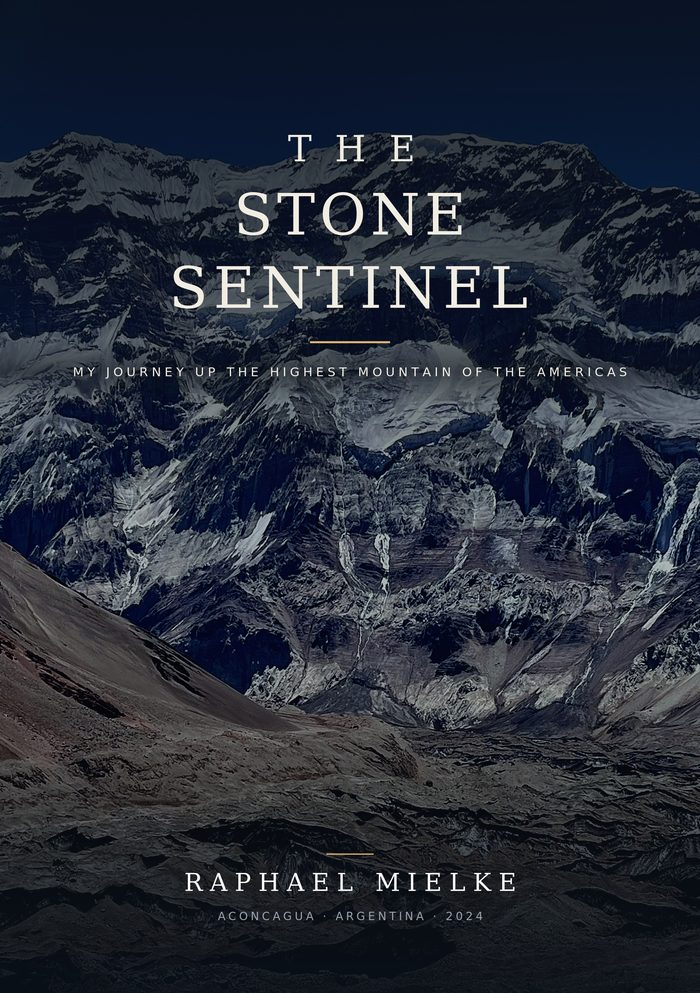
“The Stone Sentinel” tells the expedition behind these numbers – three weeks of dust, storm, and thin air.
Get the book on AmazonKeep reading: What does the expedition cost? · The summit-day packing list · How dangerous is it, really?
← To the full Aconcagua Q&A