The numbers, without drama
Several thousand people attempt the summit each season; on average, two to three die per season, almost always above 6,000 meters. In just the two-plus weeks we were on the mountain, two people died – our season, with four deaths, ran above the average.
What matters is how: the vast majority of fatalities trace back to altitude sickness, cardiovascular failure, and exhaustion – not to falls. The normal route has no technical climbing sections. Aconcagua rarely punishes the misstep, but reliably punishes overconfidence.
The four rules that make the difference
- Ascend slowly – acclimatization sets the pace, not ambition.
- Drink a lot – six to eight liters a day.
- Stay honest about your symptoms – headaches, nausea, and confusion are not to be concealed, not even out of fear of jeopardizing the expedition. I made that mistake myself; why it became the most dangerous night of my expedition is in the book.
- Turn around when in doubt – perhaps the greatest achievement on the mountain. One of our group turned around just short of the summit; it was the strongest decision I saw up there.
The danger is manageable for those who follow all four. It can be lethal for those who skip any one of them.
The dark side: rescue at altitude
What is rarely talked about: above roughly 6,000 meters, every rescue becomes a major operation, because at some point the air is too thin even for helicopters. On Aconcagua the situation is far better than in the Himalaya, but even here it can take time before someone can be brought down. That is exactly why the special insurance for rescues above 6,000 meters is mandatory – and why your own decision to turn around remains the most reliable rescuer.
Two facts on this, as of 2026: the highest helicopter landing site is at Nido de Cóndores, around 5,450 meters – anyone in trouble above that is first brought down on foot. And the park now bills helicopter evacuations as a rule. Add to that the mandatory medical checks at Confluencia and base camp: the park doctors measure oxygen saturation, pulse, and blood pressure – and may end your climb if the numbers are off. That is not harassment; it is one reason the statistics are not worse.
The full story is in the book
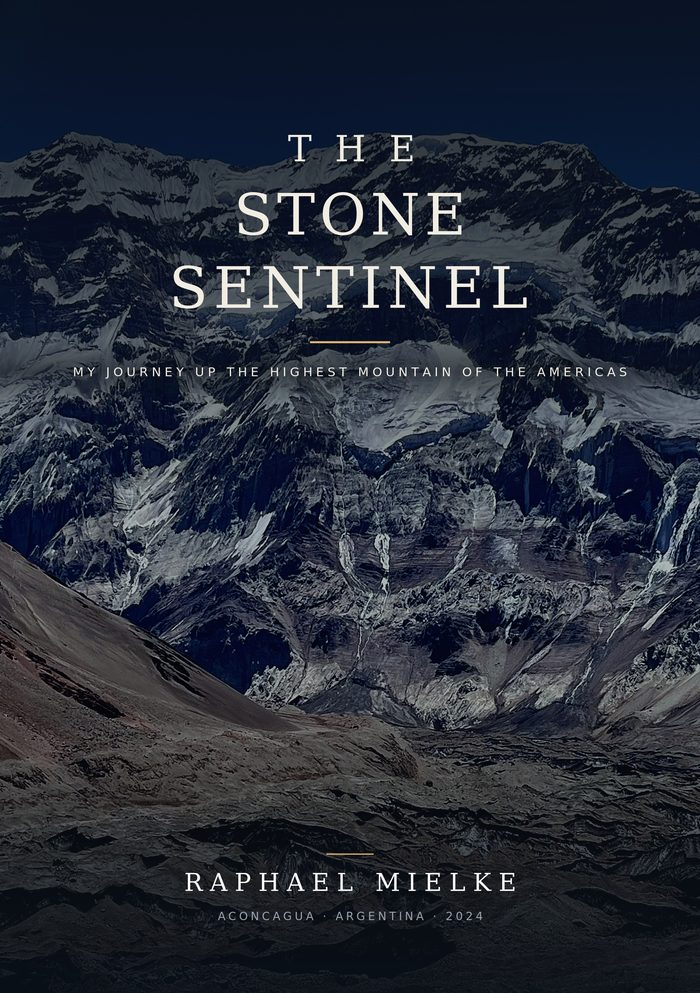
“The Stone Sentinel” tells the expedition behind these numbers – three weeks of dust, storm, and thin air.
Get the book on AmazonKeep reading: Training for Aconcagua · The summit-day packing list · What does the expedition cost?
← To the full Aconcagua Q&A